
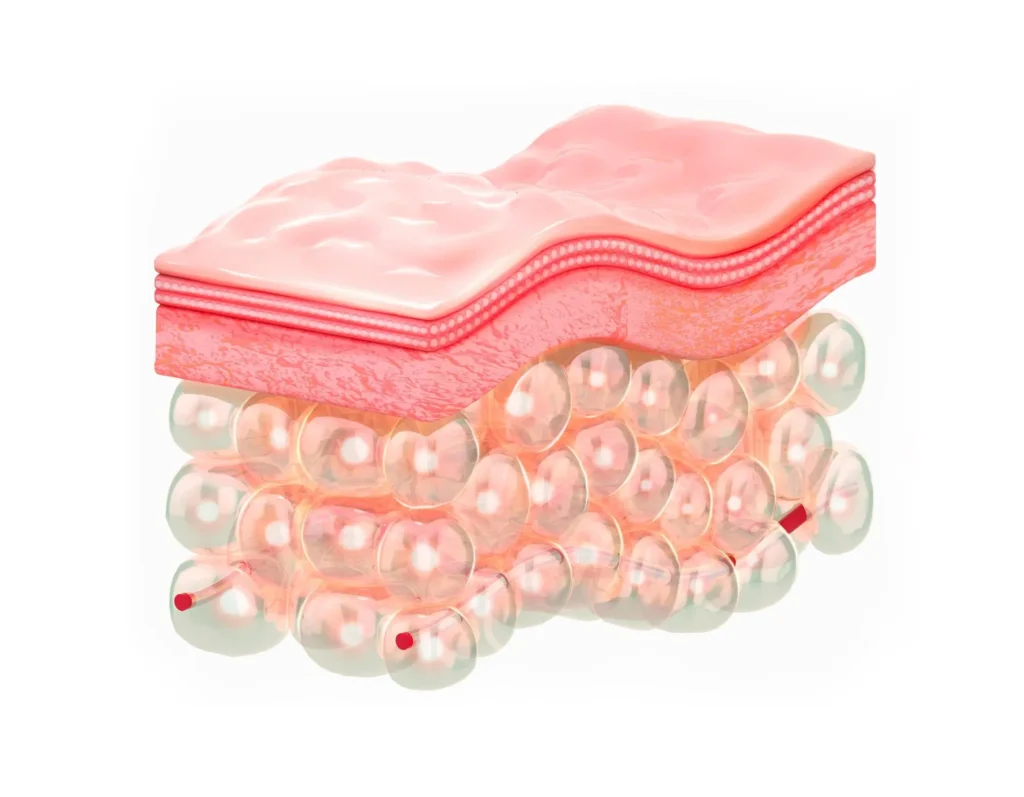
Let’s Talk Anatomy: Understanding the Layers of Your Skin
Our skin is a complex and fascinating organ, composed of three primary layers: Epidermis, Dermis, and Subcutaneous Tissue (Hypodermis). Each layer plays a vital role in protecting, regenerating, and maintaining the health and appearance of our skin. Let’s dive deeper into each layer to understand their functions and why this knowledge matters for effective skincare.
1. The Epidermis – The Skin’s Outer Layer
The epidermis is the topmost layer of the skin, serving as a protective barrier between our bodies and the external environment. It is composed of four sub-layers, dominated by keratinocytes, which produce keratin, a protein found in skin, hair, and nails.
• The Stratum Corneum (Horny Layer):
This outermost layer is made of dead cells rich in keratin. These cells form a protective shield that prevents water loss and shields against environmental damage. They are continuously shed and replaced by cells from the lower layers.
• The Stratum Granulosum (Granular Layer):
Characterized by cells with a grainy appearance due to an increased production of keratin. This layer strengthens the skin’s barrier function.
• The Stratum Spinosum (Prickly Layer):
Composed of cells connected by desmosomes, which maintain the structural integrity of the skin and ensure proper communication between cells.
• The Stratum Basale (Basal Layer):
The deepest layer of the epidermis, it connects the epidermis to the dermis. This layer houses melanocytes, which produce the pigment melanin, responsible for skin color and protection against UV damage.
2. The Dermis – The Skin’s Middle Layer
Located beneath the epidermis, the dermis is a thicker, more complex layer composed of connective tissue. It provides the skin with elasticity, strength, and the ability to sense and respond to the environment.
• The Papillary Layer:
This upper part of the dermis contains dermal papillae that interlock with the basal layer of the epidermis, creating a strong bond between the two layers. This layer is rich in capillaries, which nourish the epidermis.
• The Reticular Layer:
The lower portion of the dermis, made up of elastin and collagen fibers, gives the skin its firmness and elasticity. It also contains hair follicles, sebaceous (oil) glands, sweat glands, nerves, and blood vessels.
3. The Hypodermis – The Subcutaneous Layer
The hypodermis is the deepest layer of the skin, consisting of connective tissue and fat. It acts as an insulator, energy reserve, and cushion, protecting muscles, bones, and internal organs from trauma.
Why Is This Knowledge Important?
Knowledge is power, especially when it comes to skincare. Understanding the structure and function of each skin layer helps us appreciate the complexity of our skin and make informed decisions about treatments and products. Here’s why it matters:
1. Tailored Treatments
Different treatments target different layers of the skin. For example:
• Superficial treatments like exfoliation and serums focus on the epidermis.
• Deeper treatments, such as microneedling or laser therapy, stimulate the dermis to boost collagen production.
2. Precision in Skincare
Knowing which processes occur in each layer allows us to match the right products and technologies to your skin’s specific needs.
3. Avoiding Misinformation
Marketing claims often oversimplify skincare science. By understanding the anatomy of the skin, you can sift through hype and focus on what’s scientifically valid.
4. Professional Guidance
Skincare isn’t a one-size-fits-all approach. My expertise ensures that your treatment protocol is tailored to your skin type, condition, and goals, avoiding the risks associated with self-diagnosis or random online purchases.
Your Skin’s Journey, Backed by Science
Every layer of your skin has a role to play, and every treatment has a purpose. Whether it’s enhancing the protective function of the epidermis, boosting collagen production in the dermis, or nourishing the subcutaneous tissue, a well-informed approach is the foundation of healthy, glowing skin.
Let me guide you with a personalized, science-based treatment plan that respects the complexity of your skin while delivering real results.
Because great skin isn’t just about beauty—it’s about understanding and caring for the incredible organ that protects us every day. 🌟
